
Leave Your Message
Choosing a reliable Bronzing Machine supplier in China requires more than comparing catalog prices. The right decision begins with your production reality. Consider paper weight, film type, sheet size, foil compatibility, registration accuracy, and daily output. A machine designed for small luxury boxes may struggle with long production runs. An attractive specification sheet can hide important weaknesses.
Printing educator Frank Romano’s often-repeated observation, “Printing is not dead; it is changing,” offers a useful perspective. Bronzing technology is changing too, especially through improved temperature control, pneumatic pressure, and automated feeding systems. A dependable supplier should explain these features clearly. Ask for a live production video, test samples, factory quality records, and details about replacement parts. Touch the finished sample. Check whether fine text remains sharp, foil edges stay clean, and adhesion holds after handling.
Service matters greatly. Ask how quickly engineers respond and whether manuals are available in clear English. Confirm installation training, warranty coverage, electrical requirements, and delivery responsibilities. A supplier who avoids direct answers may create expensive delays later. Price still matters, of course. But the cheapest quote can become costly when downtime, uneven bronzing, or unavailable parts interrupt production.
This guide is not a perfect formula. Supplier claims deserve verification. Factory visits may also reveal only one carefully prepared machine. Request independent references and repeat testing with your own materials. A thoughtful buyer compares evidence, not promises, before selecting a Bronzing Machine supplier.
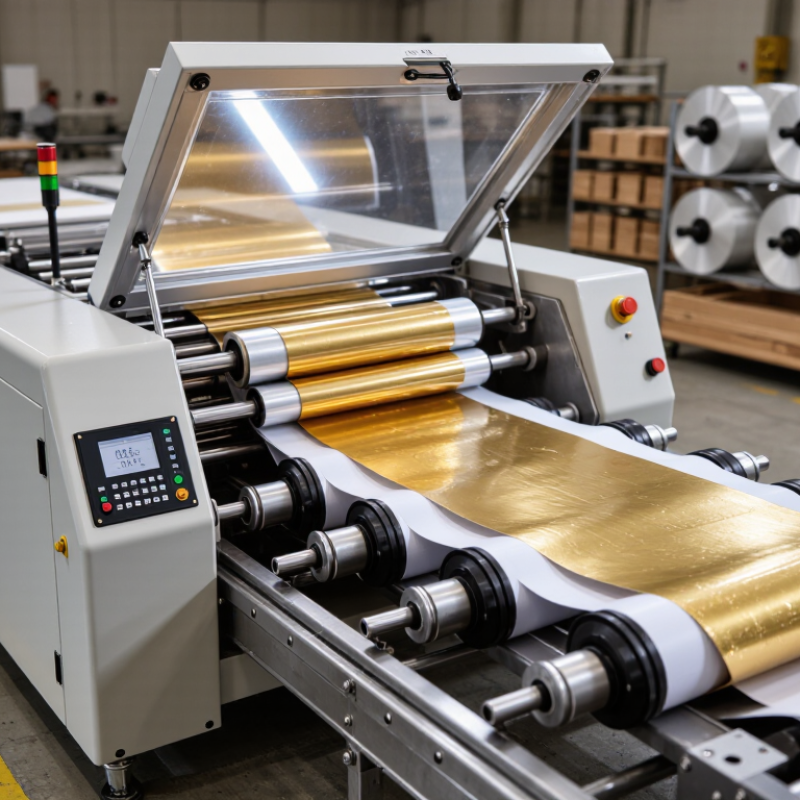
Choosing a bronzing machine in China starts with defining the process, not comparing prices. Flat-bed hot stamping suits cartons, labels, and short runs. Rotary machines support continuous packaging production. Cold-foil systems work well with inline printing, while holographic units target security or premium decoration. Each type needs different foil tension, heating control, and substrate support. Smithers’ 2024 packaging-print forecast values this global sector at more than US$400 billion, showing why stable decoration equipment matters.
Inspect key performance features closely. Ask for actual output samples on your paper, film, leather, or coated board. Check stamping speed, temperature accuracy, pressure stability, registration tolerance, and foil-waste control. A machine rated at 6,000 sheets per hour may slow sharply with fine lettering. That gap matters. Energy use, changeover time, spare-part access, and operator safety also affect the real purchase cost. ISO 12647 print-control principles can help evaluate color and registration consistency, although they do not replace a factory trial.
Tips: Request a video of continuous production, not only a single perfect sample. Confirm the maximum stamping area and minimum text size. Test three foil types and two substrate weights. Review the electrical specification with a qualified technician. Do not trust speed alone; I once treated it as the main metric, and setup losses changed the calculation. A written acceptance test is safer than a persuasive sales promise.
| Machine Type | Typical Application | Suitable Materials | Typical Production Format | Key Performance Features | Important Specification Checks | Supplier Evaluation Points |
|---|---|---|---|---|---|---|
| Manual or Semi-Automatic Flatbed Foil Stamping Machine | Short runs, product samples, invitations, business cards, certificates, and customized packaging. | Paper, coated paper, card stock, leather, synthetic leather, and some plastic sheets. | Single sheets or small batches loaded manually. | Low setup complexity, flexible job changes, adjustable stamping pressure, and relatively low initial investment. | Maximum sheet size, stamping area, heating temperature range, pressure adjustment, cycle rate, and compatible foil width. | Request sample stamping on the actual substrate and verify temperature stability, pressure uniformity, operator safety, and spare-part availability. |
| Automatic Flatbed Hot Foil Stamping Machine | Commercial printing, folding cartons, book covers, labels, stationery, and medium-volume packaging. | Paperboard, coated stock, laminated sheets, synthetic materials, and selected plastic surfaces. | Stacked sheets fed automatically through a flatbed stamping section. | Higher productivity than manual models, repeatable registration, programmable foil advance, and reduced labor input. | Maximum sheet format, feeder capacity, foil-feeding distance, stamping pressure, registration accuracy, and rated operating speed. | Check feeder stability, waste-foil collection, control-system functions, changeover time, electrical configuration, and documented acceptance-test results. |
| Roll-to-Roll Foil Stamping Machine | Continuous production of labels, decorative films, flexible packaging, and narrow-web printed materials. | Paper rolls, pressure-sensitive label stock, films, laminates, and other flexible web materials. | Continuous web processing from an unwind roll to a rewind roll. | Continuous operation, controlled web tension, adjustable foil feeding, and lower interruption frequency for long runs. | Maximum web width, unwind and rewind diameter, web-speed range, tension-control method, foil-roll capacity, and maximum substrate thickness. | Evaluate web alignment, tension consistency, splice handling, edge-guide performance, emergency-stop response, and actual running footage during testing. |
| Rotary or Inline Foil Stamping Machine | High-volume label production, flexible packaging, folding cartons, and inline finishing after printing. | Paper, label stock, coated films, laminates, and selected flexible packaging webs. | Web-fed rotary or inline production connected to printing or converting equipment. | High throughput, continuous registration, reduced handling, and efficient integration with other finishing processes. | Web width, repeat length, die or cylinder configuration, line speed, registration tolerance, foil-saving function, and inline compatibility. | Confirm mechanical compatibility with the existing line, control-system communication, tooling availability, maintenance access, and stable output at target speed. |
| Pneumatic Flatbed Stamping Machine | Medium-volume stamping where consistent pressure is required for cartons, leather goods, labels, and promotional products. | Paperboard, paper, leather, synthetic leather, coated materials, and some rigid plastic parts. | Individual sheets or parts positioned on a flatbed worktable. | Fast actuation, repeatable pressure, compact construction, and suitability for frequent production cycles. | Required air pressure, air consumption, stamping area, cycle time, pressure adjustment, working height, and noise level. | Check whether the required air compressor is included, inspect air-line components, verify pressure consistency, and request safety documentation for the complete system. |
| Hydraulic Foil Stamping Machine | Large-area or deep-impression work, rigid substrates, premium packaging, signage, and industrial decorative components. | Thick paperboard, leather, wood-based panels, selected plastics, and other materials requiring higher forming force. | Usually sheet-fed or component-by-component production. | High and stable stamping force, suitability for large dies, and good performance on thicker or less compressible substrates. | Maximum force, platen size, pressure-control range, heating-zone layout, cycle time, hydraulic oil requirements, and cooling system. | Verify hydraulic-system sealing, pressure repeatability, platen parallelism, maintenance requirements, electrical safety, and total installed power. |
| Digital Foil or Toner-Activated Foiling Machine | Variable-data decoration, short-run packaging, personalized labels, photo products, and proofing. | Suitable digitally printed paper, coated stock, synthetic sheets, and selected toner-compatible media. | Sheet-fed or web-fed digital production without a conventional hot stamping die for every design. | Fast artwork changes, variable data capability, low tooling requirements, and economical short-run customization. | Printer or toner compatibility, supported sheet size, foil type, resolution, speed, media thickness, and software workflow. | Test metallic coverage, adhesion, fine text, solid areas, and variable-data files; confirm consumable availability and software support. |
| Holographic Foil Stamping or Security Foiling System | Brand-protection features, security documents, premium packaging, and decorative effects. | Paper, coated board, labels, films, and approved security substrates. | Sheet-fed or web-fed, depending on the stamping and registration system. | Precise registration, controlled foil placement, optical effects, and compatibility with security or diffraction foils. | Registration tolerance, holographic foil compatibility, repeat length, web or sheet format, security-control functions, and inspection method. | Confirm foil traceability, access control, waste handling, registration performance, technical confidentiality procedures, and sample approval process. |
| Hot Foil Stamping Unit for Embossing or Die-Cutting Lines | Integrated carton, label, and commercial-print finishing lines requiring stamping plus embossing or die cutting. | Paperboard, coated paper, labels, and laminated packaging materials. | Inline or near-line sheet-fed production. | Combined finishing operations, fewer handling steps, improved registration, and reduced work-in-process time. | Interface dimensions, sheet-transfer format, die compatibility, maximum pressure, heating zones, registration system, and line speed. | Check integration drawings, interface signals, tooling standards, commissioning support, operator training, and compatibility with current production equipment. |
| Special-Purpose Small-Object Foil Stamping Machine | Caps, containers, cosmetic components, promotional items, small leather goods, and molded parts. | Rigid plastics, coated plastics, leather, synthetic leather, wood, and selected metal-coated components. | Individually positioned parts or dedicated fixtures. | Custom tooling, controlled positioning, localized heating, and repeatable decoration on curved or irregular surfaces. | Part dimensions, fixture design, stamping angle, heated-area size, cycle time, pressure range, and automatic loading options. | Ask for a complete fixture plan, inspect part positioning repeatability, test curved-surface adhesion, and clarify tooling ownership and replacement costs. |
| Foil Stamping Process | Metallic decoration, matte effects, pigment transfer, texture enhancement, and premium visual finishing. | Paper, paperboard, leather, synthetic leather, films, plastics, and selected coated surfaces. | Sheet-fed or web-fed, according to the machine architecture. | Uses heat, pressure, and a stamping die or compatible transfer method to release foil from its carrier film onto the substrate. | Substrate coating, foil grade, die temperature, dwell time, pressure, speed, surface energy, and adhesive compatibility. | Supplier should provide process parameters, compatible foil recommendations, troubleshooting guidance, and repeatable samples using the buyer's material. |
| Supplier Selection Criteria | Comparing equipment suppliers for export purchase, factory expansion, or replacement of existing machinery. | All substrates and formats relevant to the planned production process. | Short-run, batch, continuous, inline, or customized production. | Best value depends on output, registration, uptime, energy use, changeover time, product quality, and lifecycle cost rather than purchase price alone. | Machine configuration, production capacity, power supply, air requirements, installation conditions, warranty, compliance documents, and spare parts. | Review factory capability, quality-control records, reference installations without relying only on brochures, remote or onsite testing, delivery schedule, training, service response, and written performance guarantees. |
| Quality and Acceptance Testing | Pre-shipment verification and comparison of supplier performance before final payment or installation. | The buyer's actual substrate, foil, die, artwork, and production format. | Representative production run under agreed operating conditions. | Confirms stamping coverage, adhesion, registration, temperature stability, pressure consistency, waste rate, and practical output. | Define measurable tolerances for registration, temperature variation, cycle rate, acceptable defects, uptime, noise, and safety functions. | Use approved samples, signed test protocols, serial-numbered tooling lists, inspection records, packaging checks, and clearly defined remedies for failed acceptance criteria. |







 Wechat: ANNIELV88