Top 10 Die Cutting Press Machines That Boost Production Efficiency?
In the fast-paced world of manufacturing, efficiency is crucial. The right machinery can significantly impact production rates. One piece of equipment that stands out is the Die Cutting Press. These machines are designed to create precise shapes quickly and enhance overall workflow. With countless options available, selecting the best one can be daunting.
In this article, we will explore the top 10 Die Cutting Press machines that can boost production efficiency. Each model has unique features tailored for different needs. From speed to accuracy, these machines offer considerable advantages. It's vital to choose a machine that aligns with your business goals.
While we highlight the best choices, it's important to remember that no machine is flawless. Each Die Cutting Press has its limitations. Users must weigh production needs against these drawbacks. Ultimately, the right decision can lead to enhanced efficiency and higher output.

Understanding Die Cutting Press Machines and Their Importance
Die cutting press machines play a crucial role in various manufacturing industries. These machines cut materials with precision, dramatically impacting production efficiency. According to a report by Smithers Pira, the global die-cutting machine market is projected to reach $2.4 billion by 2025, reflecting a growing demand for efficient production methods.
The importance of these machines lies in their ability to significantly reduce labor costs and material waste. Studies indicate that advanced die cutting technology can enhance productivity by up to 30%. This is vital in today's fast-paced market, where time and resources are limited. However, not all operations achieve the desired efficiency. Many companies struggle with machine downtime and maintenance issues. This highlights the need for routine checks and operator training.
Employing die cutting machines requires careful consideration of settings and adjustments. An improper setup can lead to subpar quality and increased waste. Industry experts stress the importance of understanding machine specifications and selecting the right materials. Regular performance evaluations can ensure that production stays aligned with targets, helping businesses remain competitive in a demanding landscape.
Key Features to Consider When Choosing a Die Cutting Press Machine
When choosing a die cutting press machine, several key features can greatly influence production efficiency. The machine's speed is critical. A faster machine can cut multiple layers of material in a shorter time. This reduces overall production time significantly. Ensure to check the cutting speed specifications before making a decision.
Another vital feature is the machine's versatility. It should handle different materials effectively, from paper to heavier substrates. Look for models that offer adjustable pressure settings. This flexibility can accommodate various thicknesses of materials. Operators must find a balance between efficiency and quality. A machine that cuts too quickly may compromise precision.
Durability should also be a major consideration. A robust machine can endure daily wear and tear. Investing in a solid machine may minimize repairs over time. Operators may also need to reflect on user-friendliness. A complex interface can lead to errors and slow down production. Ultimately, selecting the right die cutting press machine involves assessing these features closely.
Top 10 Die Cutting Press Machines for Enhanced Production Efficiency
Die cutting press machines play a vital role in enhancing production efficiency across various industries. According to a recent industry report, integrating advanced die-cutting technology can boost output by up to 30%. This increase in production speed allows businesses to respond quickly to market demands, ultimately driving higher profit margins.
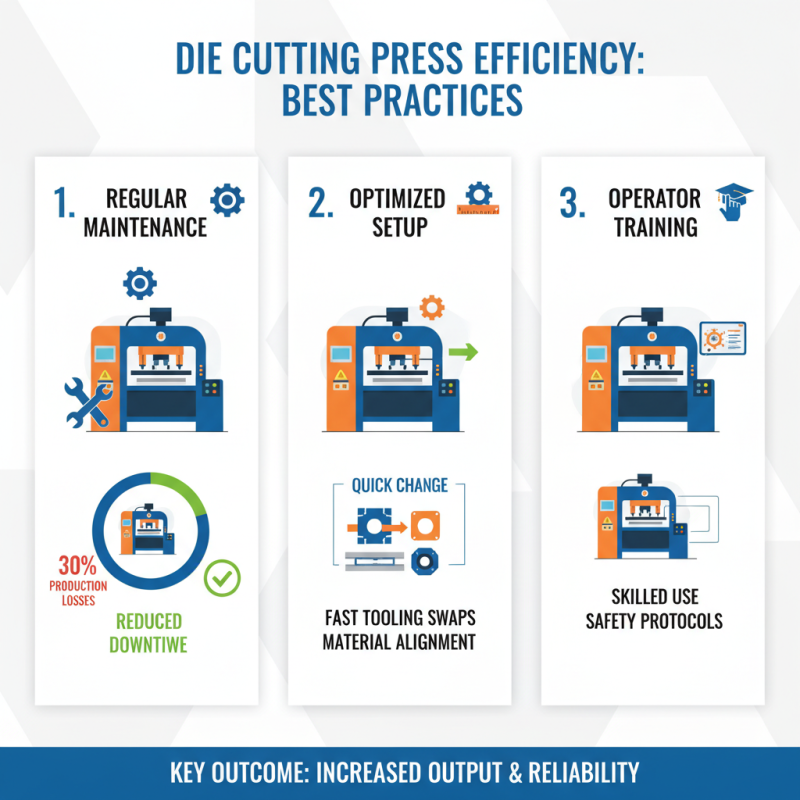
Maintenance practices impact the overall efficiency of die cutting machines. Regular inspections can prevent costly downtimes, with studies showing that unplanned machine failures can reduce productivity by nearly 20%. Operators should be trained to spot wear and tear early, which can save valuable operational time.
Here are a few tips to enhance the use of die cutting machines:
1. Regularly clean the machine to avoid residue buildup. This practice can increase blade life.
2. Monitor the type and quality of materials used for die cutting. Poor quality can lead to more frequent adjustments.
3. Establish a routine for operator training. Knowledgeable staff can optimize machine usage and reduce errors significantly.
Incorporating these practices can result in greater efficiency and better production outcomes, reflecting the importance of both technology and human expertise in modern manufacturing.
Top 10 Die Cutting Press Machines for Enhanced Production Efficiency
Comparative Analysis of Popular Die Cutting Press Machine Brands
In the world of die cutting, efficiency is key. A comparative analysis of popular die cutting press machine brands reveals significant differences in performance metrics. According to the latest industry reports, machines can enhance productivity by up to 30% when optimized correctly. Understanding the unique features of each brand can help manufacturers choose the right equipment for their needs.
One key factor to consider is the speed of operation. Some machines operate at an impressive 150 strokes per minute, which can drastically reduce production time. However, it's vital to weigh speed against precision. A machine that sacrifices accuracy for speed may lead to increased material waste. Research indicates that efficient die cutting systems can lower waste by as much as 25%, saving both cost and resources in the long run.
Tips: Regular maintenance can significantly prolong the lifespan of your die cutting press. Perform routine checks and calibrations to ensure optimal performance. Additionally, training operators on best practices can improve overall efficiency. Seek feedback from your team; their insights can highlight potential areas for improvement.




 Wechat: ANNIELV88