Choosing a Ud Impregnation Machine is not just a matter of comparing prices or maximum line speeds. The right choice depends on your fiber, resin system, target output, and the consistency your finished tape requires. A machine that performs well in a brochure may behave differently with your actual materials.
Composite-materials expert Stephen W. Tsai is often credited with the principle, “Composites are not materials; they are a design concept.” That idea matters here. Impregnation quality depends on how the machine controls tension, resin content, temperature, and line speed together. Look closely at the details: heater zones, roller alignment, control accuracy, cleaning access, and the availability of replacement parts. Small details matter. Ask suppliers for documented operating ranges and, where possible, run a trial using your own fiber and resin. Measure the results rather than relying on a confident sales demonstration.
This guide presents ten practical tips for evaluating a Ud Impregnation Machine, from production capacity and process controls to maintenance, technical support, and total operating cost. It also points out questions buyers sometimes overlook, such as changeover time and operator training. No checklist can guarantee a perfect purchase. Real production conditions can expose weaknesses that a test run misses. Still, careful comparisons and clear acceptance criteria can reduce avoidable surprises and help you choose equipment suited to your process—not just the most impressive specification sheet.
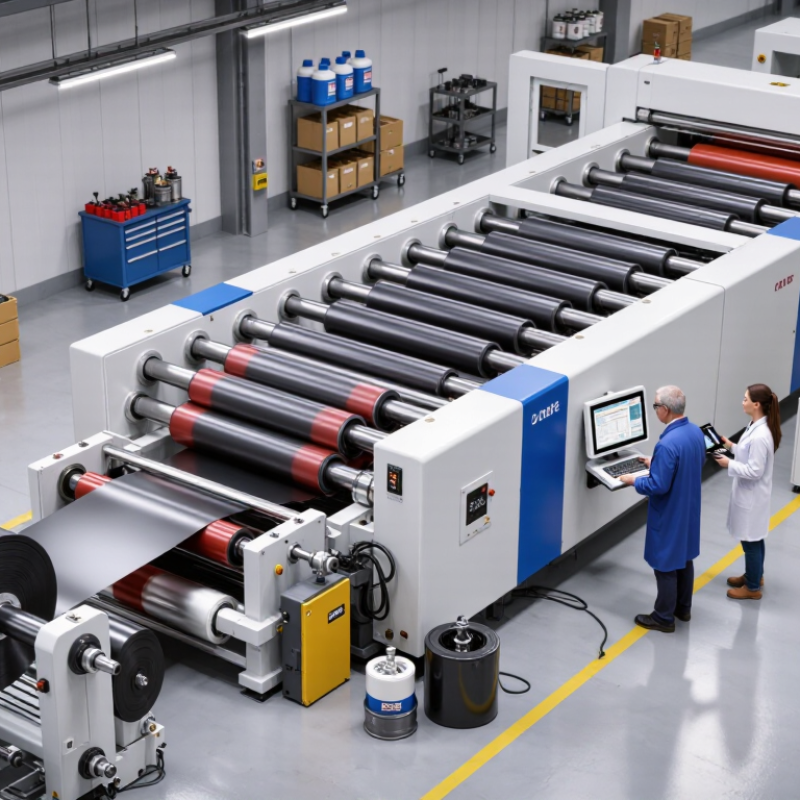
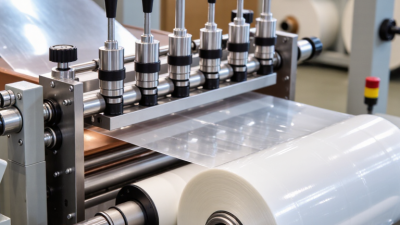
A unidirectional (UD) impregnation machine coats aligned reinforcing fibers with resin to create a consistent, one-way composite layer. The fibers may be glass or carbon, while the resin can be thermoplastic or thermoset. The machine guides a spread fiber band through controlled heating, resin application, and consolidation. Its purpose is not simply to add resin. It must help wet the fibers while preserving their alignment and limiting voids.
The exact process varies with the materials and production line. Operators may adjust tension, temperature, and line speed, then inspect the tape for dry spots, resin-rich edges, or waviness. A sudden speed increase, for example, can leave resin less time to spread through the fiber bundle. Small changes matter. Consistent measurements are useful, but they do not replace examining the finished material. A tape can meet a thickness target and still show uneven fiber distribution. In practice, there is rarely one setting that works perfectly for every resin batch. That part takes patience, and sometimes the first adjustment is wrong. Understanding how the machine handles each process stage helps teams identify defects earlier and make more informed equipment choices.
Choosing a UD impregnation machine starts with the material, not the catalogue. Specify fiber type, tow count, tape width, resin chemistry, and target fiber volume. Carbon tow and glass roving behave differently under tension; resin viscosity and temperature also affect wet-out. Small trials matter. Record line speed, tension, resin pickup, and void levels across several runs, not just one ideal sample.
Production goals need numbers. IEA’s Global EV Outlook 2024 reports nearly 14 million electric-car sales in 2023, about 18% of all car sales. GWEC’s Global Wind Report 2024 records 117 GW of new wind installations that year. These figures signal activity in adjacent composite markets, not guaranteed orders for your line. Estimate saleable output by shift, including changeovers, cleaning, startup scrap, and planned maintenance. A machine rated for peak speed may miss your actual target. Still, forecasts are forecasts. Check whether the supplier’s quoted capacity uses your fiber, resin, and width, then request a representative trial. A neat spreadsheet can still be wrong. Keep room for future material changes, but avoid paying for width or speed your production plan cannot use.
| Tip | What to Define | Useful Data or Check | Why It Matters |
|---|---|---|---|
| 1. Specify the reinforcement | Identify the fiber type, form, filament or tow size, and incoming material format, such as spread tow, unidirectional fabric, or multiple tows. | Document the reinforcement supplier’s recommended handling tension and the material’s width, areal weight, and allowable temperature exposure. | Fiber format and handling limits affect creel design, spreading, tension control, and the risk of fiber damage or uneven coverage. |
| 2. Set the resin requirements | Define the resin family, target resin content, viscosity or melt-processing window, and whether the resin is supplied as a film, powder, solution, or melt. | Use the resin manufacturer’s processing guidance for temperature, time, and storage or drying requirements; confirm compatibility with the selected impregnation method. | Resin chemistry determines the heating, metering, impregnation, cooling, and ventilation requirements of the line. |
| 3. Define the product geometry | List the required tape width, thickness, number of lanes, and allowable variation across the product. | Provide nominal dimensions and tolerances from the intended downstream process or product specification. | Product dimensions influence tooling, spreading width, consolidation, slitting, and the amount of material that can be produced per pass. |
| 4. Calculate required throughput | Translate annual demand into an hourly production target, including expected operating shifts, changeovers, and planned downtime. | For one lane, estimated reinforcement throughput (kg/h) = line speed (m/min) × width (m) × fiber areal weight (g/m²) × 60 ÷ 1,000. Example: 5 m/min × 0.30 m × 200 g/m² gives approximately 18 kg/h of reinforcement, before adding resin mass. | A transparent calculation helps compare equipment capacity with demand. Actual output also depends on resin content, yield, line availability, and process limits. |
| 5. Match the speed range to the process | Establish the required operating speed and the speed range needed for trials, multiple materials, and future products. | Ask for demonstrated speeds using a material and product geometry close to yours, with documented impregnation quality—not just the machine’s maximum mechanical speed. | Impregnation and consolidation require sufficient process time. A high nominal speed does not guarantee acceptable wet-out or consistent product quality. |
| 6. Check impregnation and consolidation | Define acceptable resin distribution, void content, thickness consistency, and surface condition for the intended application. | Agree on a sample-based acceptance plan, including inspection methods and test conditions. Validate representative material at the intended production settings. | Quality criteria should be verified on the resulting tape or laminate, rather than inferred from machine settings alone. |
| 7. Plan heating and cooling | Specify the resin’s processing window and the required product condition at winding, cutting, or the next production step. | Review heating-zone control, temperature measurement locations, cooling capacity, and any required exhaust or ventilation provisions. | Stable thermal control supports repeatable processing and helps prevent defects such as incomplete impregnation, resin degradation, or winding problems. |
| 8. Evaluate controls and changeovers | Consider recipe storage, sensor monitoring, alarms, data logging, and the time required to change material or product width. | Request a list of logged process variables, such as line speed, zone temperatures, and tension, and define which records are needed for traceability. | Useful controls make trials more repeatable, support troubleshooting, and can reduce setup time between production runs. |
| 9. Confirm material handling and safety | Review roll or creel capacity, loading method, edge guidance, guarding, emergency stops, and operator access. | Check that the proposed layout accommodates your material roll dimensions and complies with applicable workplace and machine-safety requirements. | Safe, practical material handling can reduce downtime and operator exposure while supporting consistent feeding into the process. |
| 10. Verify capacity with a production trial | Assess the machine using your material, target product, acceptance criteria, and planned operating conditions. | Record sustained good-product output, start-up and changeover losses, scrap, and operating time. Calculate usable output from accepted product rather than nameplate speed. | A representative trial provides a more reliable basis for capacity planning, staffing, and investment decisions than a specification-sheet estimate. |
Planning note: Throughput examples are calculations, not guaranteed machine ratings. Confirm process settings, product quality, and sustained output through trials with the intended materials and specifications.
A UD impregnation line should be judged by its usable process window, not just its maximum speed. Compare web width, speed range, heating-zone uniformity, nip-pressure adjustment, and tension control. Ask for actual tolerances, sensor locations, and calibration intervals. A polished control screen proves little.
The JEC Observer’s 2023 market study estimated that 12.7 million tonnes of composites were produced worldwide in 2022. That scale makes repeatable processing important: small shifts in resin content or fiber tension can affect downstream quality and material waste. Check whether the machine logs temperature, pressure, speed, and alarms against each production run. Data you can review later matters.
Tips: Compare the stated resin-content range with your material specification. Request a sample run using your own fiber and resin, then inspect the web across its full width. Watch the edges. Verify that recipe changes are traceable and that sensors can be checked without stopping production. An impressive top speed may not suit your actual process. I would still ask operators what drifts during long runs; brochures rarely answer that.
Tip: Request a documented run-at-rate trial using your own fiber and resin. Check tension stability, resin temperature, line speed, and finished-laminate consistency across a full shift. Ask for reject-rate records, not just a polished sample. Small details matter. During the visit, inspect guards, emergency stops, ventilation, and access around heated rollers. Operators should be able to reach routine controls without leaning across moving material.
Tip: Review maintenance access before comparing prices. Can technicians replace a worn roller or clean resin buildup without dismantling half the line? Check spare-part lead times, preventive-maintenance schedules, fault logs, and training plans. The U.S. Department of Energy’s 2010 Operations & Maintenance Best Practices report estimates predictive maintenance may save 8–12% versus preventive maintenance and 30–40% versus reactive maintenance. These are broad benchmarks, not guaranteed savings for an impregnation line.
Tip: Put supplier support in writing. Confirm response hours, remote diagnostic options, commissioning support, and who trains each shift. Ask for sample alarm histories and a realistic service-response scenario. A fast reply is useful; a clear fix is better. Compare warranty exclusions carefully, especially for wear parts and process-related faults. I would also ask current users about recurring stoppages. One awkward question can reveal more than a smooth sales presentation.
A machine trial should use your actual fiber, resin, and target width, not a convenient substitute. Ask the supplier to run a short production-like test at more than one line speed. Record resin content, fiber alignment, temperature stability, and visible defects. Small variations matter. A glossy sample can still hide uneven impregnation, so inspect cut edges and compare several sections.
Set acceptance criteria before testing. For example, agree on allowable resin-content variation, usable speed range, and changeover time. Keep the test conditions in writing; otherwise, two machines may appear comparable when they were tested differently. If possible, take samples back for independent measurement. That adds time, but it can reveal problems a quick demonstration misses.
Compare total ownership cost, not just the purchase price.
Include installation, operator training, energy use, routine maintenance, replacement parts, and expected downtime. Ask what servicing typically requires and how quickly common parts can be supplied. A lower-cost machine may be sensible for steady, simple runs. It may be a poor fit if frequent material changes are expected. Estimates are imperfect, especially before production begins, so leave room in the budget for commissioning adjustments.