
Leave Your Message
Choosing the right Hydraulic Cutting Press manufacturer requires more than comparing catalog prices. In 2026, buyers must examine machine stability, cutting accuracy, energy use, safety design, and after-sales support. A polished brochure cannot replace factory evidence.
This guide introduces leading manufacturers through practical, evidence-based criteria. It considers production experience, engineering capability, certification practices, and customer service. It also reviews press capacity, working-table size, stroke control, hydraulic response, and automation options. These details matter on a busy factory floor, where uneven pressure can damage leather, foam, rubber, or layered textiles. A reliable supplier should explain tolerances clearly and provide test results, maintenance instructions, and spare-parts access.
Real experience matters.
The ranking should not be treated as permanent. Market performance changes, new factories emerge, and established brands may weaken in specific regions. Some manufacturers publish limited technical data, which makes direct comparison difficult. That limitation deserves attention. Readers should verify specifications, local service coverage, installation requirements, and applicable safety standards before making a purchase. Independent testing and a sample-cutting trial can reveal problems that sales materials hide.
Our overview aims to support informed industrial decisions, not promote one universal solution. The best manufacturer depends on material type, daily production volume, required precision, budget, and operator skill. With careful evaluation, buyers can identify equipment that delivers consistent force, manageable maintenance, and dependable long-term value.
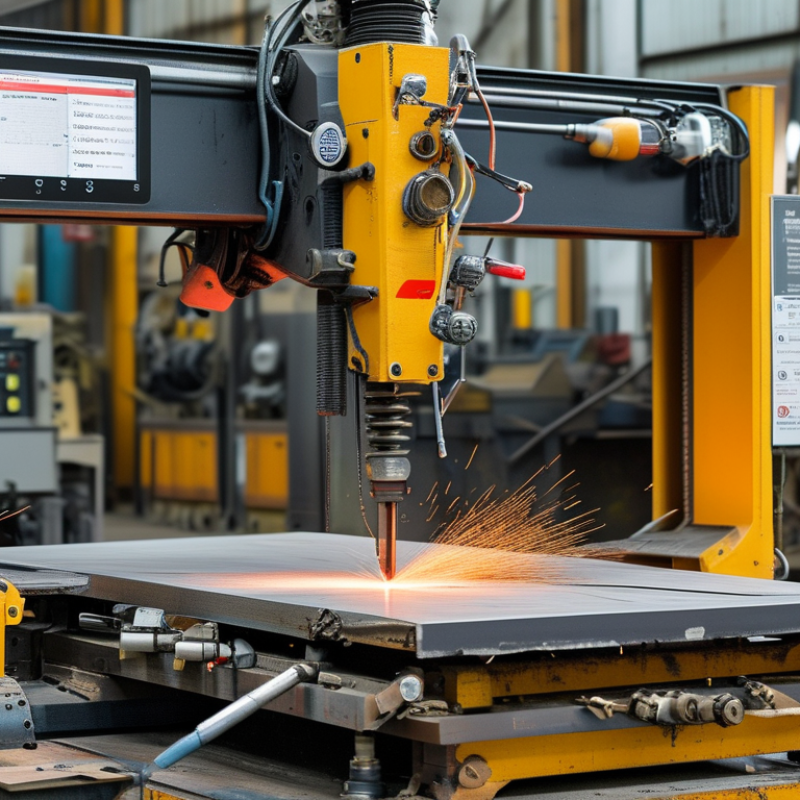
A hydraulic cutting press converts fluid pressure into controlled linear force, usually through a cylinder, ram, bed, and cutting die. The pump supplies oil. Valves regulate speed and pressure. A pressure gauge helps operators verify settings before each cycle. Modern frames commonly use welded steel, guide columns, adjustable stroke controls, and guarded work zones. This structure supports leather, rubber, foam, textiles, gaskets, packaging materials, and composite sheets.
The application determines the machine’s useful force, daylight, bed size, and repeatability. A 100-ton press may suit dense sheet stacks, while thinner materials need less force. That comparison is not universal. Die sharpness, material hardness, and cutting clearance change actual requirements. Grand View Research estimated the global hydraulic press market at about USD 15 billion in 2023, with a projected 4.7% compound annual growth rate through 2030. MarketsandMarkets’ industry analysis also identifies automation and consistent cycle control as important demand drivers.
For purchasers comparing 2026 manufacturers, technical evidence matters more than catalogue force. Ask for pressure stability, cycle-time data, energy consumption, guarding validation, spare-part availability, and service response. ISO 16092-3:2017 provides safety guidance for hydraulic presses, but compliance claims still require documentary verification. In maintenance reviews, leaks around seals often reveal poor alignment or neglected filtration. Small detail. Big consequence. Market reports use different definitions, so forecasts should not be treated as precise measurements. That limitation deserves attention when production budgets are fixed.
| Data Dimension | Hydraulic Cutting Press Category | Typical Technical Data | Main Structural Components | Common Materials Processed | Primary Applications |
|---|---|---|---|---|---|
| Definition | Hydraulic Cutting Press | A machine that uses hydraulic pressure to move a cutting head or beam and apply controlled force to a die or cutting tool. | Hydraulic power unit, cylinder, moving beam, machine frame, cutting board, control system, and safety devices. | Leather, rubber, gasket sheet, foam, felt, textiles, plastics, composites, and layered soft materials. | Die cutting of flat sheets, rolls, laminates, and preformed material stacks. |
| Working Principle | Four-Column Hydraulic Press | Four guide columns support the moving beam and help maintain parallel movement during cutting. | Four columns, upper beam, lower worktable, hydraulic cylinder, guide bushings, and adjustable stroke controls. | Leather goods, footwear components, rubber parts, foam products, and industrial gaskets. | High-repeatability cutting where consistent pressure distribution is required across a large die. |
| Working Principle | C-Frame Hydraulic Press | Open-front construction provides convenient access for loading and unloading workpieces. | Rigid C-shaped frame, hydraulic cylinder, cutting head, worktable, die holder, and control panel. | Sheet rubber, foam, insulation, synthetic leather, and textile layers. | Small and medium-format production, sampling, maintenance work, and flexible batch manufacturing. |
| Pressure Range | Light-Duty Press | Approximately 10–50 metric tons of nominal cutting force, depending on machine size and application. | Compact hydraulic cylinder, smaller worktable, manual or semi-automatic controls, and adjustable pressure regulation. | Thin foam, cloth, paper-based materials, thin rubber, and light synthetic sheets. | Prototyping, craft production, laboratory work, and low-volume component cutting. |
| Pressure Range | Medium-Duty Press | Approximately 50–200 metric tons of nominal cutting force. | Reinforced frame, larger hydraulic cylinder, guided cutting beam, programmable stroke, and two-hand safety controls. | Leather, footwear materials, rubber sheets, automotive trim materials, and multilayer textiles. | General industrial die cutting and medium-volume manufacturing. |
| Pressure Range | Heavy-Duty Press | More than 200 metric tons of nominal cutting force, with capacity determined by tooling, material thickness, and required cut quality. | Heavy welded or cast frame, high-capacity hydraulic system, reinforced columns, large worktable, and advanced guarding. | Thick rubber, dense gasket materials, composite laminates, multilayer insulation, and demanding industrial sheet products. | Large-format production, industrial sealing products, transport equipment components, and high-load die cutting. |
| Control Method | Manual or Semi-Automatic | Operator positions the material and initiates the cutting cycle using buttons, a foot pedal, or two-hand controls. | Hydraulic controls, pressure adjustment valve, limit switches, emergency stop, and basic operator interface. | Leather, foam, rubber, textile, and plastic sheet materials. | Short production runs, product development, job shops, and applications requiring frequent setup changes. |
| Control Method | Programmable or CNC-Assisted | Digital controls can manage cutting position, stroke, dwell time, pressure settings, and repeat cycles. | PLC or industrial controller, touchscreen interface, servo positioning system, sensors, and automated material handling options. | Footwear components, automotive interiors, packaging materials, insulation, and precision gaskets. | High-volume production, repeatable nesting operations, reduced setup variation, and production data monitoring. |
| Cutting Format | Single-Station Press | One cutting area is used for loading, positioning, and cutting. | Single worktable, cutting head, die holder, hydraulic actuator, and safety light or guard system. | Foam, leather, rubber, textiles, and laminated sheets. | Flexible production, mixed-product manufacturing, sampling, and small-to-medium batch sizes. |
| Cutting Format | Moving-Table or Shuttle Press | One or more tables move between loading and cutting zones to reduce idle time. | Shuttle table, hydraulic cutting head, linear guides, positioning sensors, and interlocked safety guards. | Footwear materials, automotive components, foam, insulation, and layered synthetic materials. | Higher-throughput production where loading and cutting need to occur with minimal interruption. |
| Accuracy Factors | Cutting Consistency | Influenced by frame rigidity, beam parallelism, hydraulic pressure stability, die condition, material compression, and table flatness. | Guiding columns, pressure sensors, proportional valves, calibrated stroke stops, and level work surfaces. | Materials requiring clean edges and controlled dimensions, including gaskets, footwear parts, and technical textiles. | Dimensional consistency, reduced scrap, stable edge quality, and repeatable batch production. |
| Safety Features | Industrial Safety System | Typical systems include emergency stops, two-hand controls, guards, light curtains, overload protection, and safety interlocks. | Safety relay or controller, protective guarding, emergency circuit, limit switches, and hydraulic pressure protection. | All materials processed on hydraulic die-cutting equipment. | Protection against unintended cycling, access to the cutting zone, excessive pressure, and mechanical hazards. |
| Energy and Maintenance | Hydraulic System Management | Energy use depends on motor power, duty cycle, pressure, idle time, oil temperature, and automation level. | Electric motor, hydraulic pump, reservoir, filters, valves, hoses, cylinder seals, and cooling components where required. | Suitable for continuous or intermittent processing of soft and semi-rigid sheet materials. | Preventive maintenance, leak control, hydraulic-oil filtration, seal inspection, and stable long-term operation. |
| Manufacturer Evaluation | Selection Criteria for 2026 Purchasing | Compare rated cutting force, usable cutting area, stroke, cycle time, control system, safety compliance, service support, and spare-parts availability. | Review frame design, cylinder arrangement, guide system, electrical cabinet, hydraulic components, guarding, and tooling compatibility. | Match machine specifications to material thickness, hardness, stack height, die type, and required edge quality. | Best suited to purchasing decisions for footwear, leather goods, automotive interiors, packaging, rubber products, insulation, and general industrial manufacturing. |





 Wechat: ANNIELV88